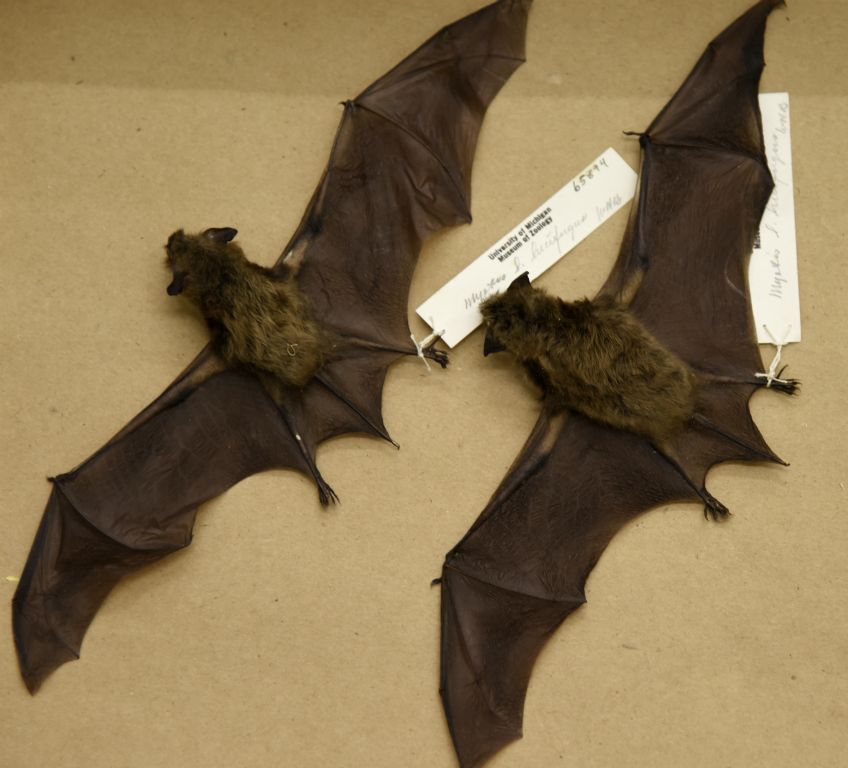
Preserved bat skins at the Research Museums Complex at University of Michigan’s Museum of Zoology. Dale Austin, Department of Ecology and Evolution, University of Michigan
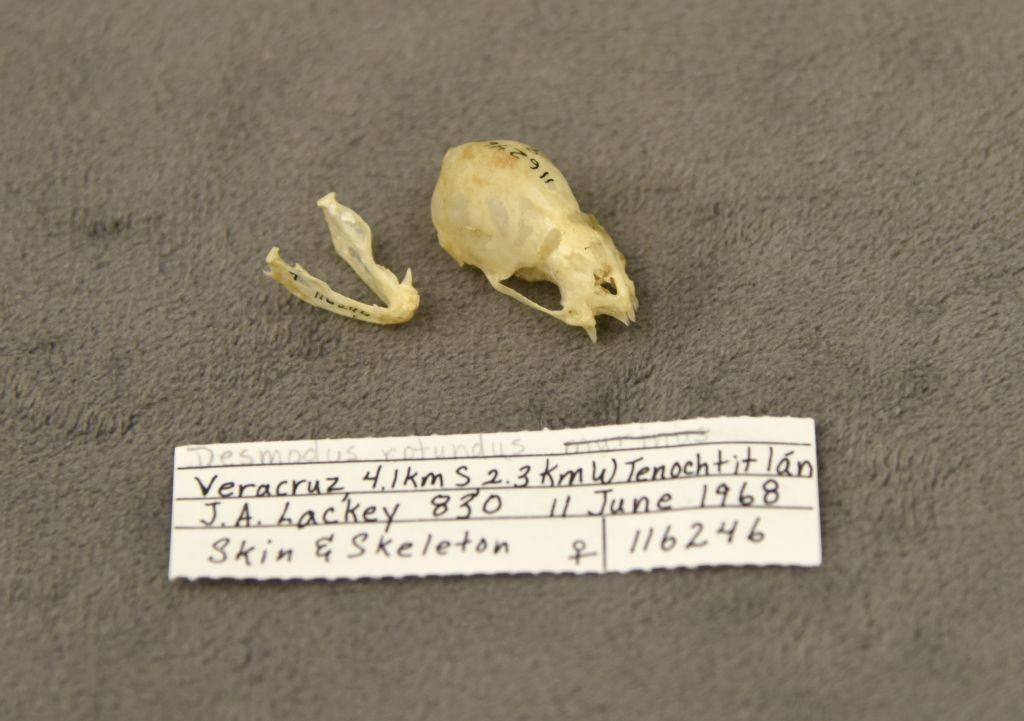
Skull of the common vampire bat Desmodus rotundus. Found in Central and South America, these highly social and cooperative bats feed predominantly on large mammals like tapirs. Dale Austin, Department of Ecology and Evolution, University of Michigan
Scan of a Desmodus rotundus skull. Shi et al, PLoS ONE 13(9): e0203022
Skull of the nectar-feeding bat Leptonycteris yerbabuenaeis, one of the the main pollinators of the blue agave plant, which is used to produce tequila and mezcal. Dale Austin, Department of Ecology and Evolution, University of Michigan Dale Austin, Department of Ecology and Evolution, University of Michigan
Scan of a Leptonycteris yerbabuenaeis skull Shi et al, PLoS ONE 13(9): e0203022
Skull of the little brown bat, Myotis lucifugus, which is the one of the most common bats in North America. While widespread, their colonies have been devastated by the white-nose syndrome epidemic affecting hibernating bats across the continent. Dale Austin, Department of Ecology and Evolution, University of Michigan Dale Austin, Department of Ecology and Evolution, University of Michigan
Scan of a Myotis lucifugus skull. Shi et al, PLoS ONE 13(9): e0203022
Skull of Pteropus hypomelanus, a fruit-eating bat of the flying fox family. They're found in Southeast Asia, Oceania and Australia. Dale Austin, Department of Ecology and Evolution, University of Michigan
Scan of a Pteropus hypomelanus skull. Shi et al, PLoS ONE 13(9): e0203022
Traditionally, museum specimens are carefully protected in drawers and cabinets, with meticulous metadata that record where and when they were collected. Dale Austin, Department of Ecology and Evolution, University of Michigan