The Sustainable Development Goals: beyond 2015
Click on the arrow (top-right) to navigate to the next slide. You can also click on individual markers to navigate directly to a specific slide.
Goal 1: End poverty in all its forms everywhere
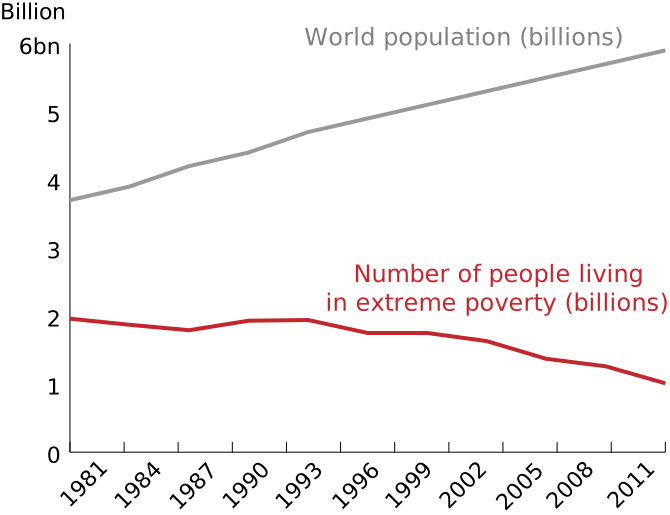
Despite the significant increase in global population, the number of people living in extreme poverty has declined. The World Bank estimates that there were approximately 1 billion people living in extreme poverty in 2011, down from 1.96 billion in 1981.
Number of people living in extreme poverty
Source: UN / The World Bank
Goal 1: End poverty in all its forms everywhere
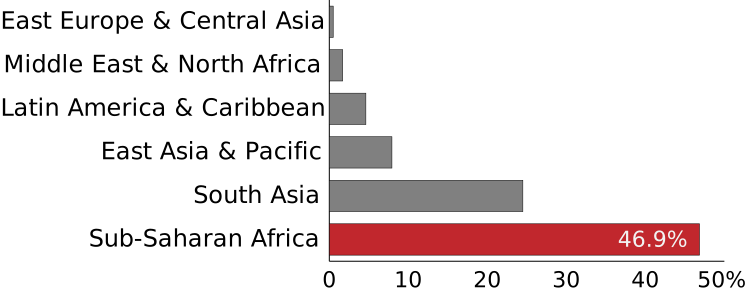
Sub-Saharan African countries contain the highest percentage of the population who are living in extreme poverty. Since 1981, this region has been the only region that saw a rise in the number of people in extreme poverty - from 52.81% in 1981 to a high of 60.84% in 1993. The figure has since decreased to 46.85% in 2011.
Proportion of people living in extreme poverty in different regions
Source: UN
Goal 2: End hunger, achieve food security and improved nutrition and promote sustainable agriculture
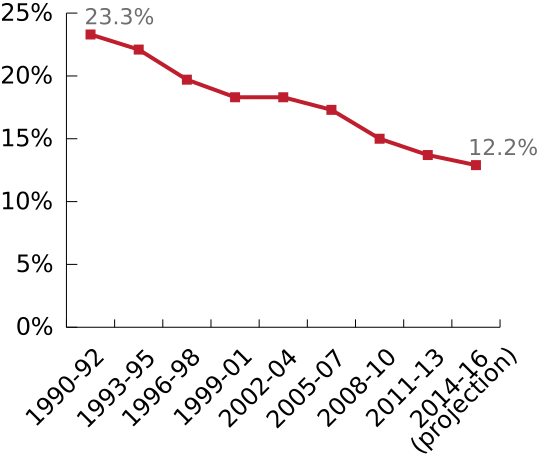
The UN estimates that there are about 795 million people who are undernourished, with the majority (about 780 million) living in developing countries. But the proportion of undernourished people in the developing regions has reduced by almost half since 1990.
The proportion of undernourished people in the world
Source: UN
Goal 3: Ensure healthy lives and promote well-being for all at all ages
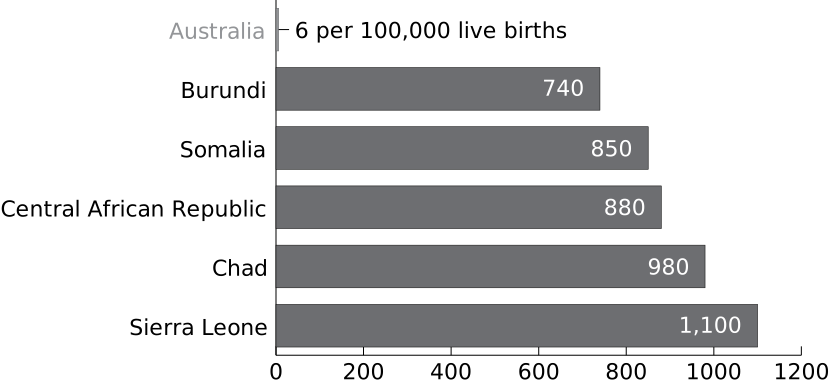
Targets include to reduce global maternal deaths to less than 70 women per 100,000 live births. In 2013, the global maternal deaths were 210 deaths per 100,000 live births, a reduction of over 40% since 1990.
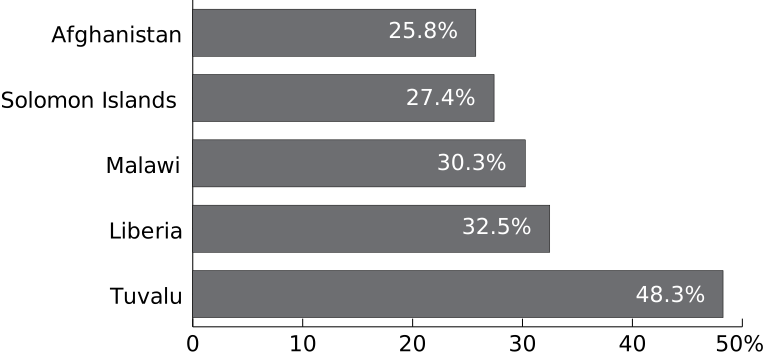
Countries with high rates of maternal mortality rates
Source: World Health Organization
Goal 4: Ensure inclusive and equitable quality education and promote lifelong learning opportunities for all
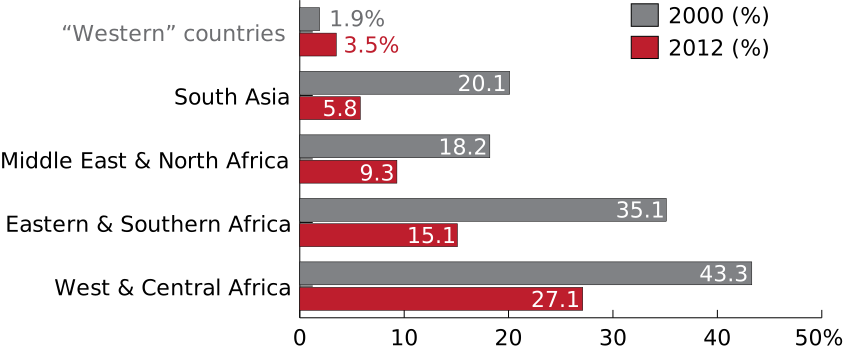
Targets include to ensure all children complete free primary and secondary education by 2030. While the number of children out of primary school has reduced in most regions, some African regions still have relatively high rates of children not attending primary and secondary schools.
Out-of-school children of primary school age, 2000 and 2012
Source: UNICEF
Goal 5: Achieve gender equality and empower all women and girls
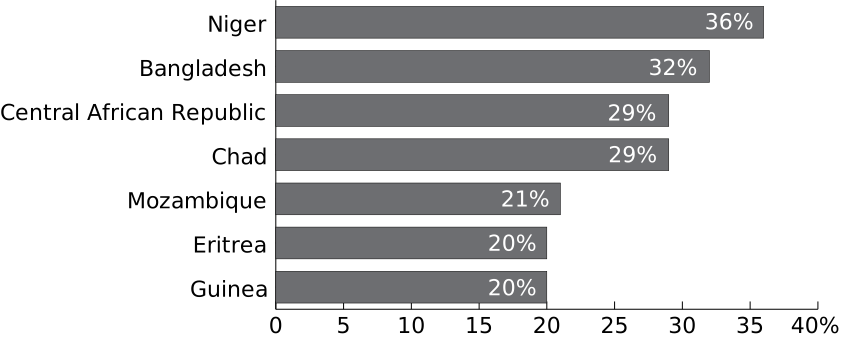
Targets include to eliminate practices such as child marriages and female genital mutilation.
Countries with high rates of child marriages (15 years or younger, 2002-2012)
Source: UNICEF
Goal 6: Ensure availability and sustainable management of water and sanitation for all
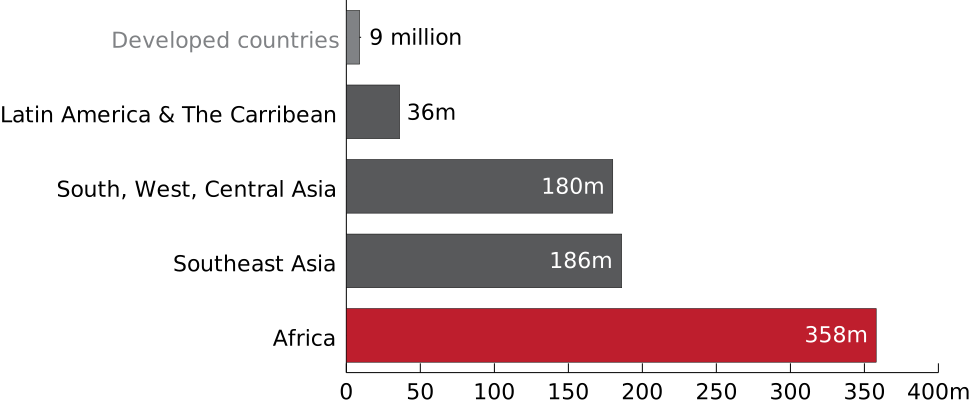
Targets include universal access to safe and affordable drinking water for all by 2030. There are about 760 million people without access to safe drinking water - the majority in African countries.
Number of people (millions) without access to safe water
Source: UN
Goal 7: Ensure access to affordable, reliable, sustainable and modern energy for all
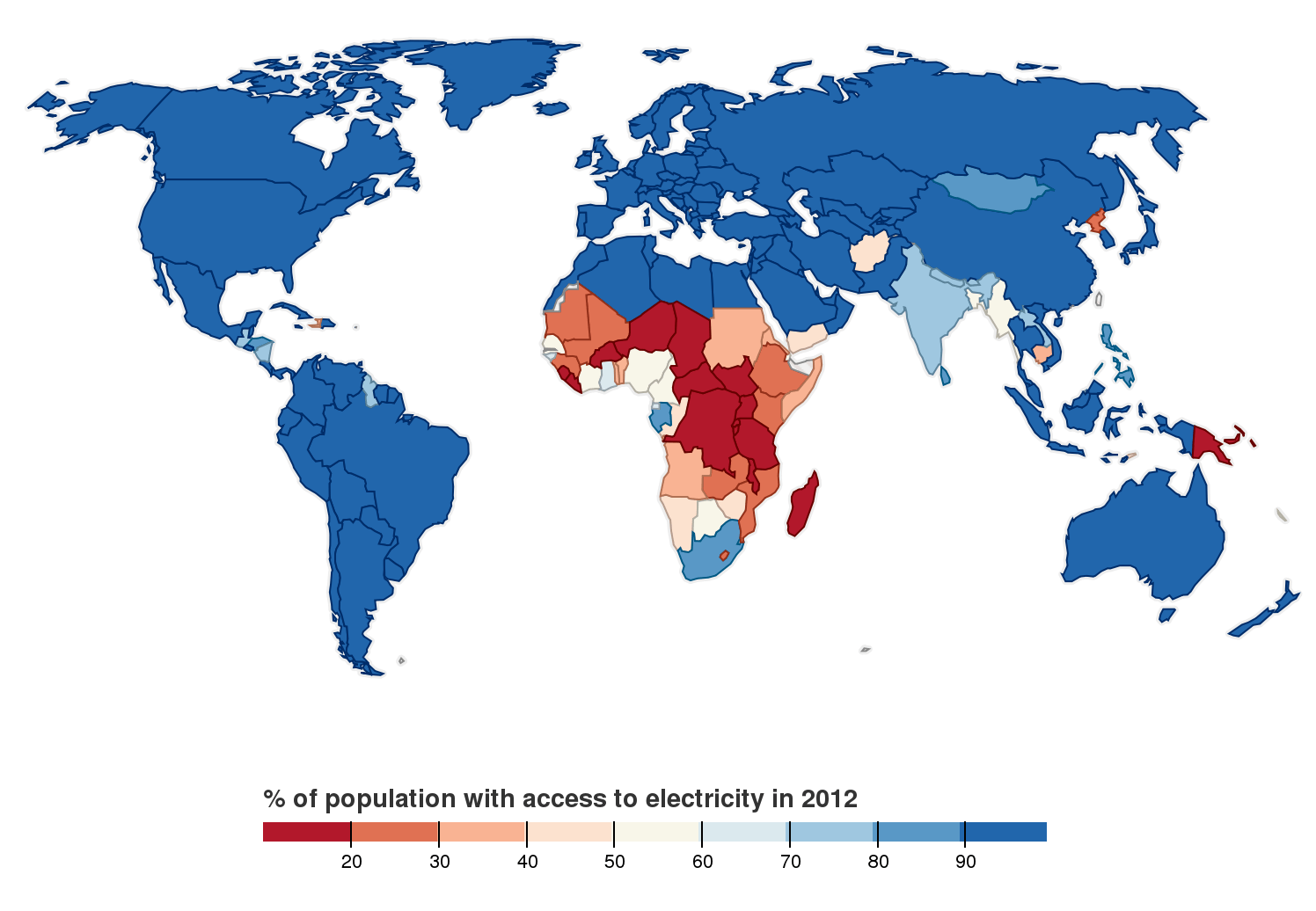
Targets include to ensure universal access to affordable modern energy services, and to substantially increase the share of renewable energy in the global energy mix.
Percentange of people with access to electricity, 2012
Source: The World Bank
Goal 8: Promote sustained, inclusive and sustainable economic growth, full and productive employment and decent work for all
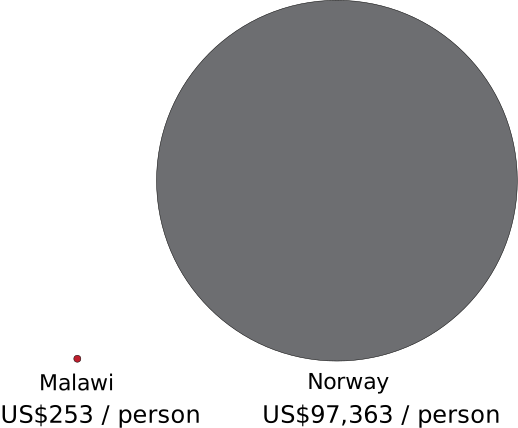
Targets to achieve at least 7% of GDP growth per year in the least developed countries, and also to substantially reduce the proportion of youth not in employment, education or training.
Countries with the highest and lowest GDP per capita (USD), 2014
Source: The World Bank
Goal 9: Build resilient infrastructure, promote inclusive and sustainable industrialization and foster innovation
Targets include to enhance scientific research, upgrade the technological capabilities of industrial sectors in all countries. The goal aims to increase the number of of research and development workers, particularly in developing countries.
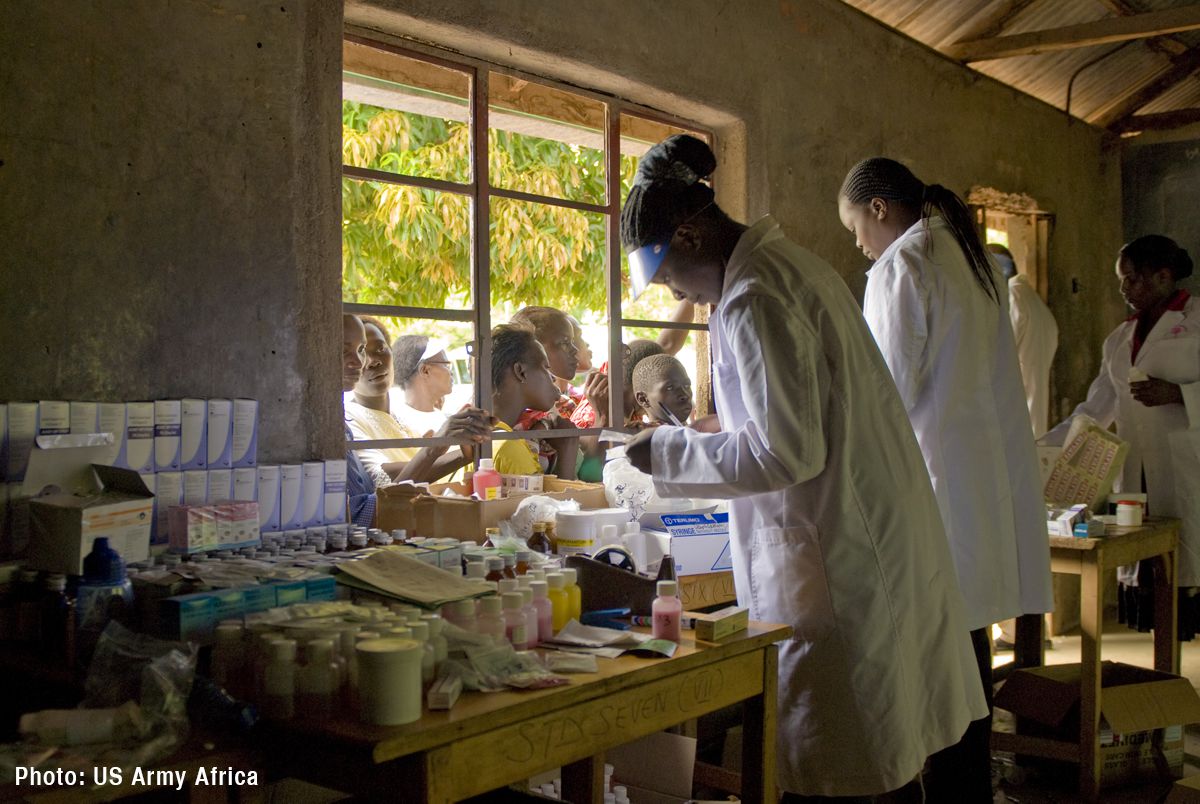
Image: US Army Africa via Flickr
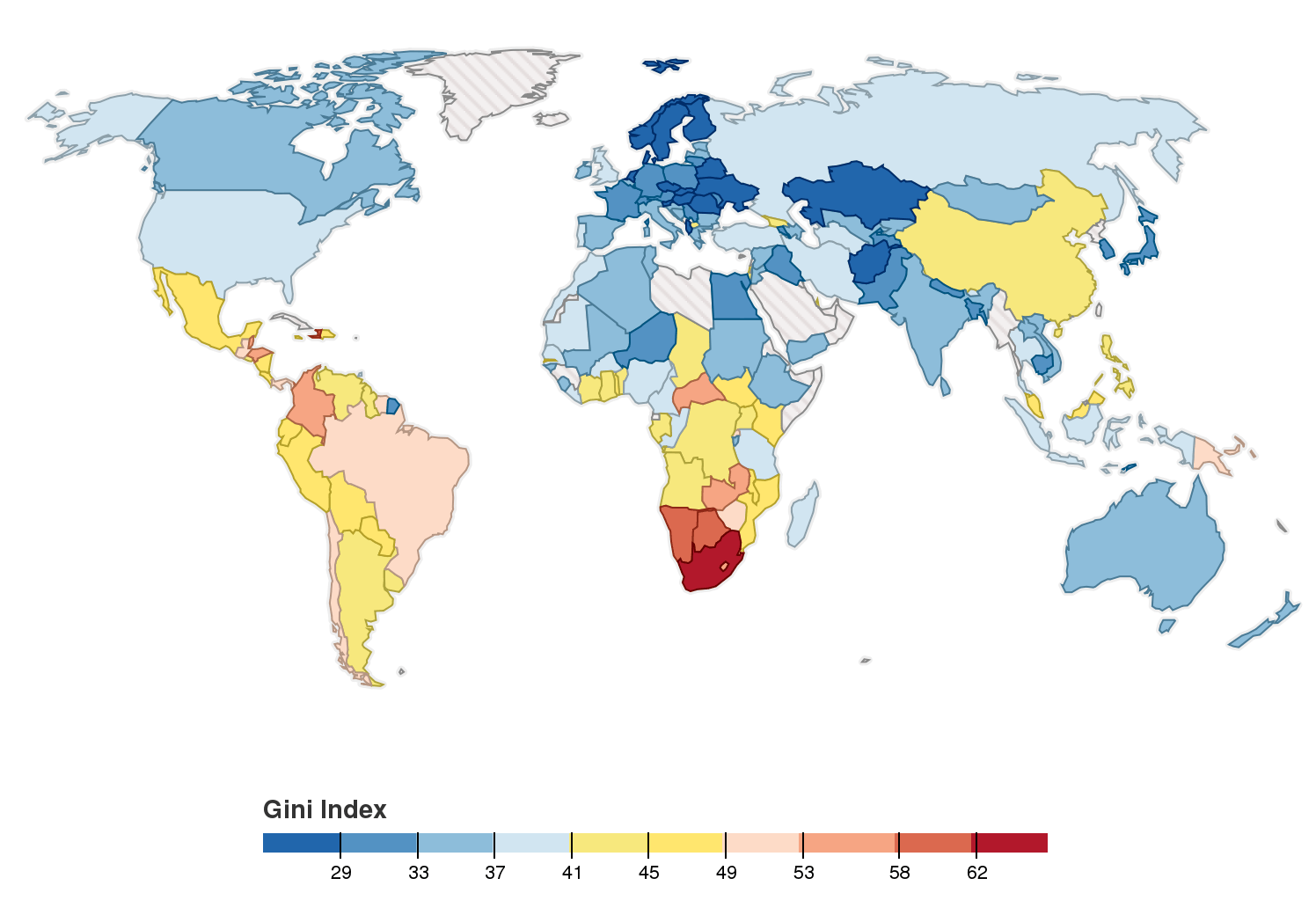
Goal 10: Reduce inequality within and among countries
Targets include to progressively achieve and sustain income growth of the bottom 40% of the population at a rate higher than the national average.
Gini coefficient index, latest available from World Bank
The Gini index is a measure of income distribution within a country. A gini coefficient of 0 indicates perfect equality, and an index of 100 indicates perfect unequality.
Source: World Bank
Goal 11: Make cities and human settlements inclusive, safe, resilient and sustainable
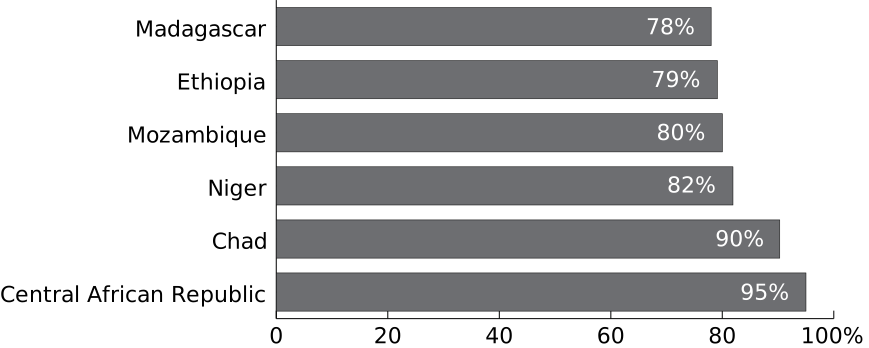
Targets include to ensure all people have access to adequate, safe and affordable housing and basic services. The goal also aims to upgrade the infrastructure of slums around the world.
Selected countries with high proportion of urban slum population
Source: UN-Habitat
Goal 12: Ensure sustainable consumption and production patterns
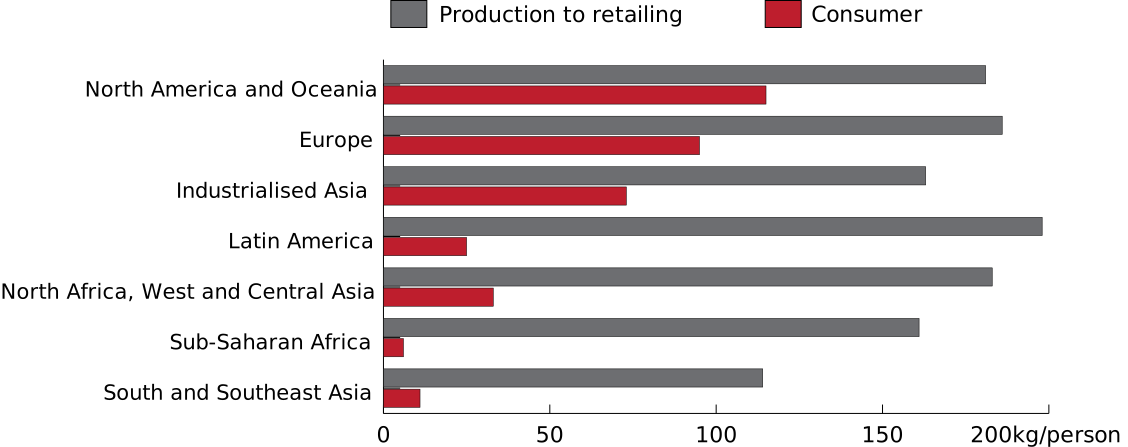
Targets include to increase the sustainable management and efficient use of natural resources. The goal aims to halve the amount of food wasted (per capita) at the retail and consumer levels and also to reduce food losses along production and supply chains.
Global food loss and waste by region, in annual per capita kilograms
Source: Food and Agriculture Organization of the United Nations
Goal 13: Take urgent action to combat climate change and its impacts
The aims are to strengthen the capacity of countries to adapt to climate-related hazards and natural disasters. The goal targets include to integrate climate change measures into national policies, strategies and planning.
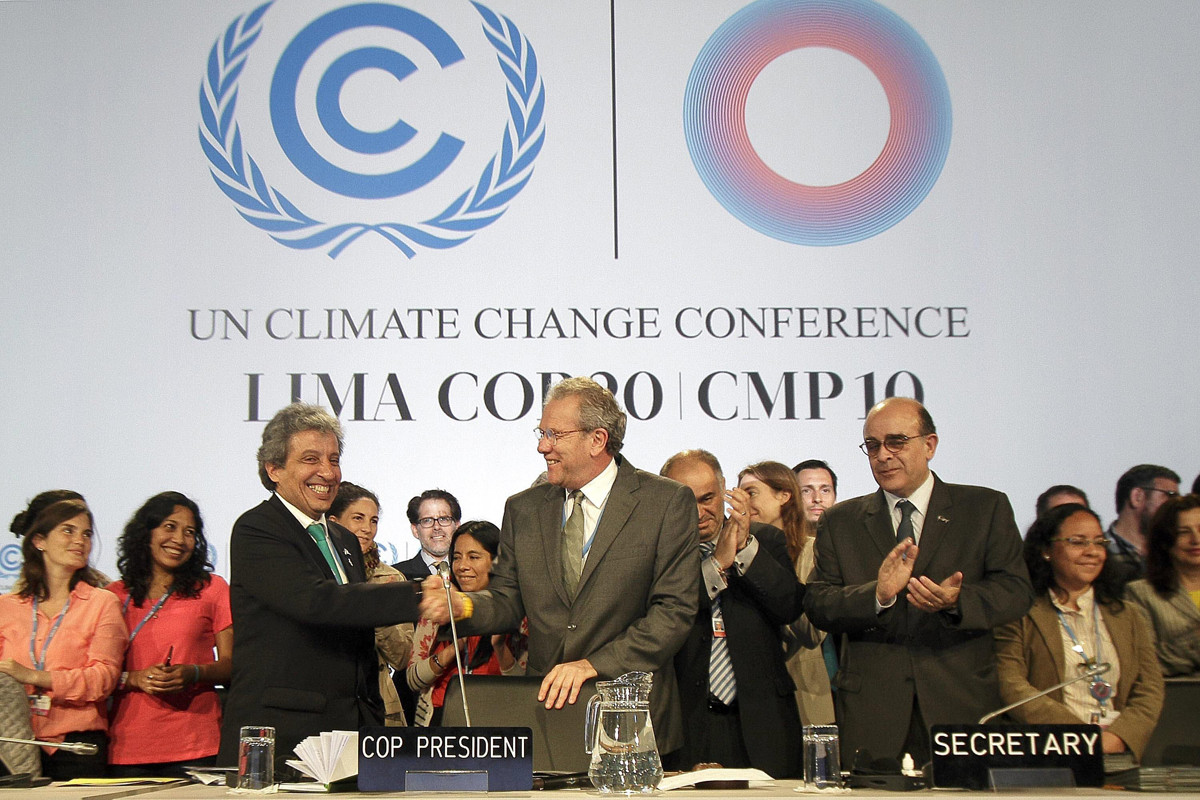
The UN will host the next round of climate change talks (known as the Conference of Parties or COP) in Paris later this year.
Goal 14: Conserve and sustainably use the oceans, seas and marine resources for sustainable development
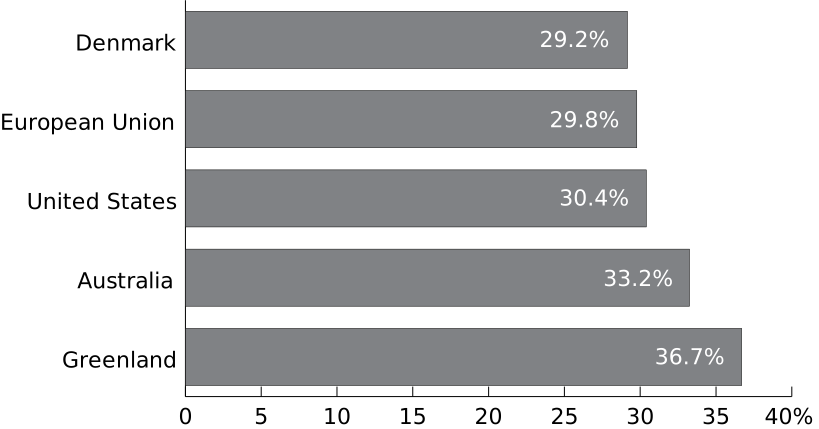
Targets include to implement science-based fishing management plans, and to end illegal, unreported and unregulated fishing by 2020. The goal also hopes to conserve at least 10 per cent of coastal and marine areas by 2020.
Proportion of coastal waters in reserves for selected countries
Source: The World Bank
Goal 15: Protect, restore and promote the sustainable use of terrestrial ecosystems, sustainably manage forests, combat desertification, and halt and reverse land degradation and halt biodiversity loss
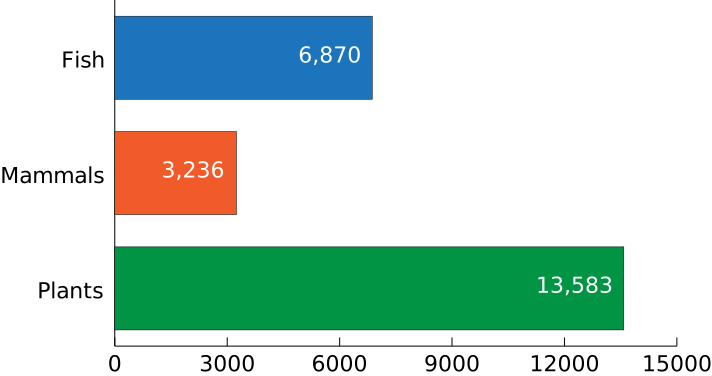
Targets include to take significant urgent action to reduce the degradation of natural habitats, halt the loss of biodiversity and, by 2020, protect and prevent the extinction of threatened species.
Estimate of the number of threatened species, 2014
Source: The World Bank
Goal 16: Promote peaceful and inclusive societies for sustainable development, provide access to justice for all and build effective, accountable and inclusive institutions at all levels
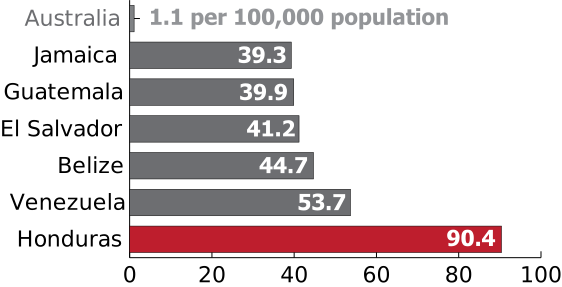
Targets include to significantly reduce all forms of violence and related death rates everywhere.
Selected countries with relatively high homicide rates (per 100,000 population), 2012
Source: UN
Goal 17: Strengthen the means of implementation and revitalize the global partnership for sustainable development
Targets include to provide additional financial resources for developing countries from multiple sources.
Net official development assistance (ODA) received (% of gross national income), selected countries (2013)
Source: The World Bank